Examining Links Between Swiss Oversight Rules and Custom Player Protection Features in App-Based Gaming Sessions
Geschrieben von Tina Hansen · 24.11.2026
Examining Links Between Swiss Oversight Rules and Custom Player Protection Features in App-Based Gaming Sessions
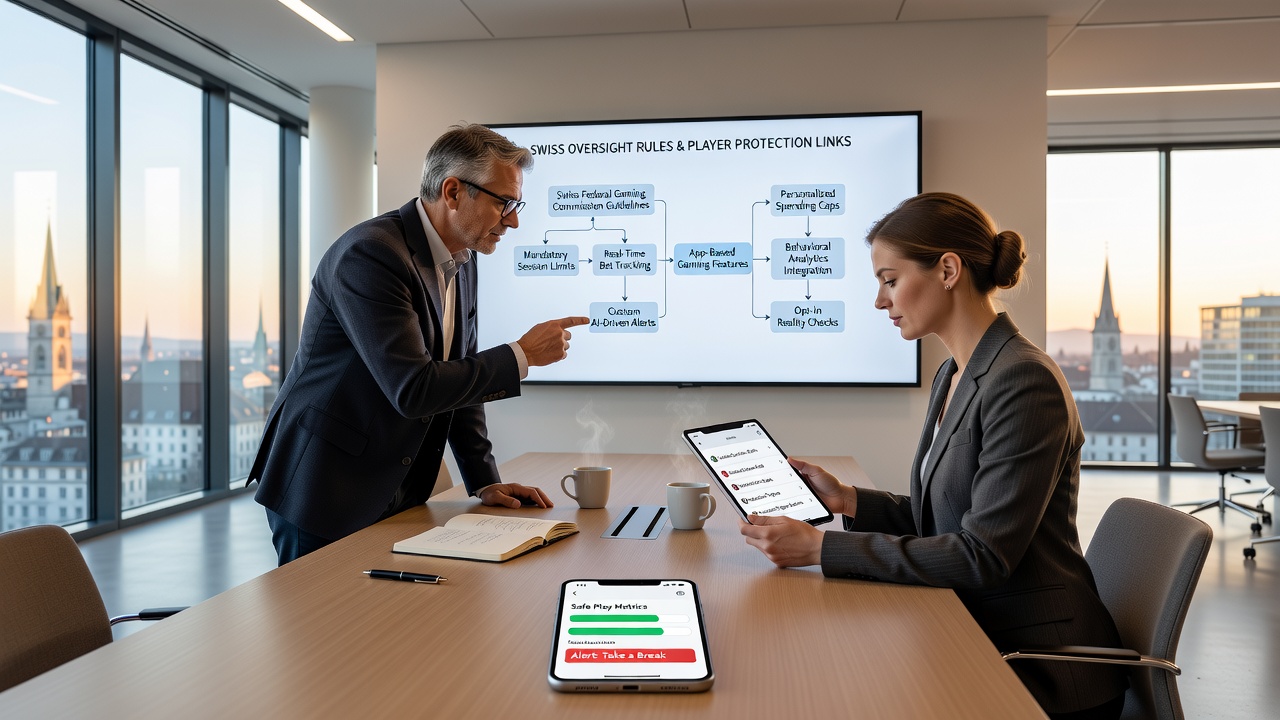
Swiss federal legislation establishes clear requirements for licensed operators to integrate player protection mechanisms directly into mobile gaming applications, and these mandates create measurable connections between oversight structures and the technical features that appear during active sessions. The Federal Act on Gambling, which took effect in 2019, assigns primary responsibility for compliance monitoring to the Swiss Federal Gaming Board, an agency that reviews app designs before granting or renewing operating permits. Operators must demonstrate that tools such as session timers, voluntary spending caps, and automated risk alerts function without user-initiated activation, because regulators view these elements as non-negotiable safeguards rather than optional add-ons.
Core Oversight Mechanisms and Their Technical Translations
License applicants submit detailed documentation that maps every regulatory clause to specific lines of code or user-interface elements, and examiners cross-check those mappings during on-site audits. When the board identifies gaps, developers receive precise remediation orders that often require new custom modules rather than generic off-the-shelf solutions. One documented pattern shows that applications targeting Swiss users incorporate geofencing combined with real-time identity verification, because the Gambling Act restricts participation to individuals located within national borders and aged twenty years or older. These technical constraints emerge directly from licensing conditions rather than market preferences, and they illustrate how oversight rules shape the architecture of daily gaming sessions.
Data collected through mandatory reporting portals reveals that operators track the frequency of self-exclusion requests and deposit-limit adjustments on a quarterly basis. The Swiss Federal Gaming Board aggregates this information and compares it against benchmarks published in annual compliance reports. Applications that record higher engagement with protection features tend to receive faster renewal decisions, because regulators interpret elevated usage as evidence that the tools are accessible and functional during live play. This feedback loop encourages further customization, such as personalized pop-up messages triggered by behavioral patterns that the system flags as elevated risk.
Player Protection Features Embedded in App Sessions
Custom modules frequently include reality-check prompts that appear after thirty or sixty minutes of continuous play, and these prompts display cumulative time and expenditure figures drawn from the user’s account history. Developers design the timing intervals in consultation with the licensing authority to match the minimum standards outlined in the ordinance on player protection. Additional layers allow users to set cooling-off periods ranging from twenty-four hours to thirty days, and the application must enforce these intervals by locking the account without exception. Observers note that such features integrate with live dealer interfaces and slot engines alike, ensuring uniform application across game types rather than isolated implementation in specific categories.

November 2026 marks the scheduled mid-term review of the current licensing cycle, during which the Swiss Federal Gaming Board will evaluate whether existing protection modules continue to meet evolving technical standards. Preparatory guidance already circulated to operators outlines expectations for enhanced biometric confirmation steps and expanded data-sharing protocols with external support services. These upcoming adjustments will require further code-level modifications, because the board has signaled that legacy verification methods will no longer satisfy updated criteria. Operators who began preliminary testing of revised modules in 2025 report smoother transitions during internal audits, suggesting that proactive alignment with oversight directives reduces implementation friction later.
Integration Challenges and Compliance Data
Technical integration of these features sometimes collides with third-party game providers that supply content across multiple jurisdictions, and Swiss licensees must negotiate separate agreements to embed jurisdiction-specific controls. Research conducted by the University of St. Gallen’s Institute for Gambling Research indicates that applications with tightly coupled protection layers record lower rates of disputed transactions compared with those relying on external overlays. The study examined anonymized session logs from 2023 through 2025 and found consistent correlations between regulatory-mandated customizations and measurable reductions in high-velocity betting sequences. Such findings feed back into the licensing process, where the board references academic analyses when assessing renewal applications.
Industry associations including the European Gaming and Betting Association have published comparative overviews that place Swiss requirements alongside frameworks used in Canada and Australia. These documents highlight that Swiss rules emphasize mandatory automation of limits, whereas other regions allow greater user discretion. The differences produce distinct app architectures: Swiss-licensed products tend to default protection settings to the most restrictive option, with users required to opt out rather than opt in. This design choice stems directly from the text of the Gambling Act and its accompanying ordinances, which prioritize prevention over reactive intervention.
Conclusion
Regulatory oversight in Switzerland continues to drive the development of tailored player protection components within app-based gaming environments, and the documented linkages appear through licensing conditions, audit outcomes, and scheduled policy reviews. As November 2026 approaches, operators prepare for the next round of technical updates that will further embed these safeguards into everyday session flows. The pattern of rule-driven customization remains consistent across operators, because compliance documentation must demonstrate explicit alignment between each oversight requirement and its corresponding software implementation.